The 48-Hour Sprint: How We Deliver in Days What Agencies Take Months to Start
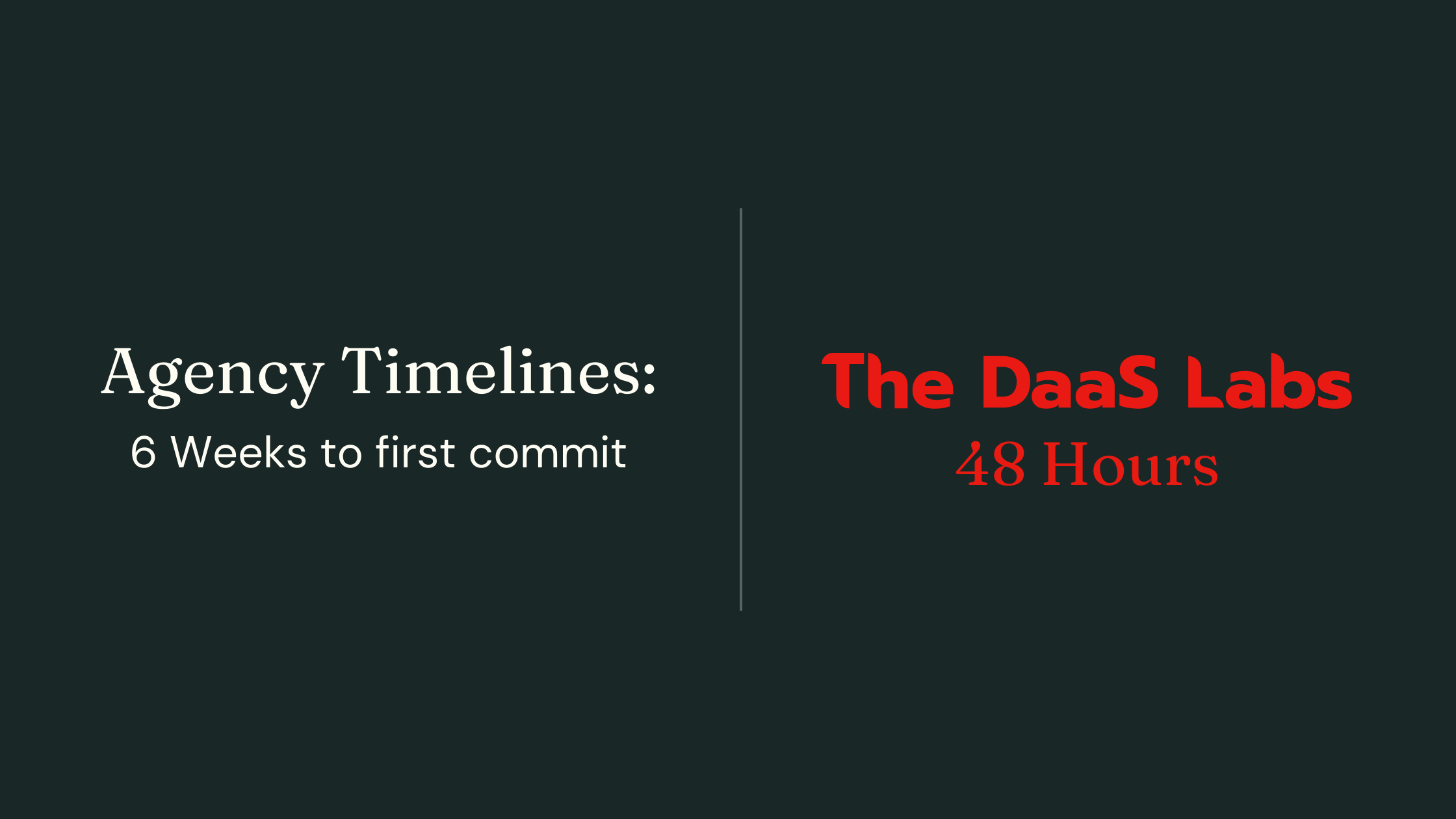
The traditional agency engagement starts with a proposal. Then a contract. Then a kickoff meeting. Then a discovery phase. Then another meeting to align on what was discovered. By the time they write the first line of code, you've lost six weeks and paid a substantial retainer for the privilege of waiting. We built The DaaS Labs around a fundamentally different premise: the best way to understand what a startup needs is to start building immediately, learn fast, and adjust in real time. Our 48-72 hour sprint cycle isn't a gimmick — it's an operational philosophy, and it's the thing clients notice most in their first week.
What Happens in the First 48 Hours
When a new client onboards, we run a focused async intake in the first two hours. No six-hour workshops. No discovery questionnaires that take a week to review. We ask the questions that actually matter: What are you building? Who uses it? What does 'done' look like for this sprint? What's your tech stack? What can't break? What's the one thing that, if we shipped it, would make this week a success? From those answers, the sprint is scoped, assigned, and started — within the same business day.

The One Active Sprint Rule
One of the most counterintuitive parts of our model is the one active sprint at a time policy. Clients can submit unlimited requests — features, bugs, integrations, anything within their track's scope. But we work through them sequentially, in the priority order the client sets. This sounds limiting. In practice, it's the exact opposite. Parallelizing work across five half-finished features isn't speed — it's the illusion of progress. Sequential focus means each thing we ship is complete, tested, and production-ready before we move to the next. Your backlog stays full. Your codebase stays clean. Your users experience features that actually work.
Why Traditional Agencies Can't Do This
A traditional agency is structured around hours billed, not outcomes shipped. Their incentive is to maximize the number of hours worked, which means more meetings, more documentation, more process. Every hour of overhead is an hour they can bill. Every week of discovery is a week of revenue. We operate on a subscription model — our incentive is to ship as much valuable work as possible so that you renew, expand, and refer. The model aligns us with your success in a way that hourly billing structurally cannot. That alignment isn't a philosophical preference — it changes what gets prioritized in every decision.
The team that ships fastest, learns fastest, and adjusts fastest is the team that survives long enough to find product-market fit.

Speed Is a Competitive Moat
In the early stage of a startup, the team that iterates fastest wins. Not the team with the best initial idea — that changes. Not the team with the most funding — that can be caught. The team that ships fastest, learns fastest, and adjusts fastest is the team that survives long enough to find product-market fit. Every week your feature is delayed is a week a competitor might ship theirs. The 48-hour sprint isn't a convenience — it's a strategic weapon, and the founders who treat it as such are the ones who arrive at their Series A with traction data instead of promises.
Ready to see what 48 hours of focused development can do for your product? Book a discovery call — no discovery phase required.
Book a Call